
Ahead of the upcoming elections, political parties have started announcing incentives to benefit women, but what do women truly seek for genuine gender parity, asks Nivedita Mookerji.

In August 2021, Nick Read, chief executive of Vodafone Plc at the time, did not mince his words while speaking about the India business in an earnings call. Replying to an analyst's question on Vodafone Idea, a venture with the Aditya Birla Group that had piled on huge debts and worrisome losses, Read described it as a highly stressed situation that "they (Vodafone Idea) are trying to navigate... "We, as a group, try to provide them as much practical support as we can, but I want to make it very clear, we are not putting any additional equity into India.''

Startup founders need to sit up and think about how not to take stardom for granted and how not to disappoint their fans who have stood in long queues for those precious selfies with popular entrepreneurs, notes Nivedita Mookerji.

Going by the RBI directive and the overall narrative, Paytm may have lost the rigour of stress tests, audits and compliance.

'To get a 100 per cent consensus document without any reservation, any bracket, any chair summary is unprecedented in the history of multilateral forums.'

'I'm very much against petrol and diesel....'' 'I travel in an electric car.' 'I have had a really good experience with it.'

'If you are going to have only a handful of telecom players on whom the entire dream of Digital India rests, it's important they are financially sustainable.'

'India has a lot of potential, not just in commercial aspects, but also in hiring of people and sourcing of products.'

At a time when the overall narrative is around India being an attractive investment destination, the two American multinationals are more specific in projecting India as their centrepiece.

'India is showing a reasonable amount of resilience, but we are still living in a world that is quite fragile.' 'That's why we hope that the government will continue to invest significantly in public capex so that we are able to ride through this cycle till the private sector is able to play its part in investing and adding to the capex cycle.'

'We showcased about 20 use cases in 5G trials in Pune and Gandhinagar and some of them were interesting and innovative.' 'However, which ones will take off and which ones would not be relevant, we don't know yet.'

Three business houses are likely to be in the final race to strike a deal with Germany's Metro AG for investing in its India unit -- Metro Cash & Carry. Industry sources in the know named Reliance, Adani Group, and Thailand's conglomerate Charoen Pokphand (CP) as potential frontrunners to acquire a partial or full stake in the Gurugram-headquartered Metro Cash & Carry, which has 31 stores and 5,000 direct employees. Around 20 companies, including strategic and private equity investors, were approached by the German chain, inviting them to bid for the Indian wholesale business, according to a source aware of the M&A developments.

The Tata group has begun its second innings with Air India from a war zone. Being first up in Operation Ganga to evacuate Indian nationals from Ukraine, the salt-to-software conglomerate has faced a real war. But the fire-fighting that the group experienced in appointing a chief executive officer (CEO) for the airline that it acquired from the government in a Rs 18,000-crore deal recently may have felt no less.

Discussing the prospect of more reform earlier this month, telecom minister Ashwini Vaishnaw announced a delay in the 5G spectrum auction. India's telecom sector regulation has to be benchmarked with the global best, he said. It's another matter that many countries have either introduced or are about to roll out 5G services that will enable cutting-edge tech in diverse areas. For India, too, it will mean a lot for healthcare, robotics and unleashing a new chapter in Digital India perhaps.

'Demand is wonderful. We have crossed 10 million on many days.' 'The Swedish trade commissioner recently said, "You guys are vaccinating the entire Sweden in one day".'

The question mark over Vodafone Idea's survival is gone after the government's telecom package, managing director and chief executive officer Ravinder Takkar said in an interaction recently. The extended moratorium for spectrum payments and adjusted gross revenue (AGR) dues has indeed ensured that Vodafone Idea survives, at least for the time being, but questions remain. Answers to those questions may determine the future of Vodafone Idea and its power to stay in a difficult telecom market in the coming years.
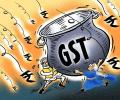
With Goods and Services Tax (GST) officers under pressure to exceed the Rs 1-trillion collection mark per month, industry has faced a barrage of recovery notices and summons issued over the last one month across sectors, according to company executives. Industry bodies have claimed harassment by field officers, blocking of input tax credit, cancellation of GST registration, threats of arrest and steep penalties, impacting their working capital and operations. Company executives pointed at an atmosphere of apprehension and fear due to such notices and summons.

The income tax (I-T) department on Tuesday extended the deadline for filing settlement applications for eligible taxpayers till September 30, as the income tax settlement commission (ITSC) ceased to exist from February 1. This comes amid interim relief provided by some high courts, directing acceptance of applications of settlement even after February 1. To dispose the pending settlement applications as on January 31, the central government has constituted Interim Board for Settlement.

'The kind of tax which will be generated from the second pillar may far outweigh what we may be losing in the first pillar.'
.jpg)
The Union government's offer of settling the retrospective taxation case with Cairn Energy may hinge on Vedanta withdrawing the ongoing arbitration from the Singapore Tribunal on the same issue. The government has offered to refund Cairn Energy Rs 7,900 crore that it had collected under the retrospective tax demand on fulfilment of certain conditions, including withdrawal of pending litigation and furnishing of an undertaking to the effect that no claim for cost, damages, interest, etc., would be filed. This condition is also part of the Taxation Laws (Amendment) Bill, 2021, passed by Parliament recently.
 © 2026 Rediff.com - Advertise with us - Disclaimer - Privacy Policy - Sitemap - Feedback - About us - Terms of use - Grievances